
Mobility and flexibility classes in SE23

A flexibility class is about moving with more ease, not forcing yourself into a stretch. Mobility and flexibility classes in SE23 can combine guided stretches, controlled movements and balance work to help you build range of motion. A regular rhythm of two to three sessions a week is recommended for significant improvements in flexibility and range of motion.
If you’re ready to start, it helps to know what a class involves and how to find a format that feels comfortable. You may be looking for a gentle introduction, a focused stretch session or movement that complements your usual training. The right starting point is one you can attend consistently and adapt to your current ability.
This guide explains what happens in mobility and flexibility classes, how different formats compare and how often to attend. It also covers how stretching can support balance and range of motion, plus what to consider when signing up for a class in SE23.
Table of Contents
What is a flexibility class?
A flexibility class uses stretches and controlled movement to explore your range of motion. Unlike a session focused on lifting or cardio, the emphasis is on moving with control rather than speed. A class might combine gentle leg stretches, shoulder movements and balance practice.
Beginners can start with movements in a comfortable range and adjust as they become familiar with the positions. You don’t need to arrive already flexible. In a seated hamstring stretch, for example, you can keep your knee slightly bent instead of reaching further. A mat may be useful, depending on the class format.
Fitness level and flexibility aren’t the same thing. Someone who walks regularly may still find a deep stretch unfamiliar, while a newer exerciser might move comfortably through a simpler sequence. Look for clear options, such as standing or seated versions of a movement, so you can take part at your own pace.
Before booking, read the class description for beginner options, standing or floor-based movements, and any equipment to bring. If you’re new, choose a session that clearly describes its pace and activities. During class, stay within a comfortable range rather than trying to match the deepest stretch you see.
If you have an injury or medical condition, consult a healthcare provider before starting a new exercise programme. You can discuss movements that may need adapting, such as seated alternatives if standing balance is difficult. Tell the instructor about relevant limitations before class so they can explain suitable options.
SE23, SE22 and SE26 postcode labels don’t tell you whether classes differ in pace, level or format. Compare each timetable’s class description, beginner guidance and travel convenience instead; those details help you judge which session suits your needs.
To identify studios and gyms in SE23, look for timetable entries that name mobility, flexibility or stretching, rather than assuming every yoga or Pilates class has the same focus. A class description should explain its movements and level, helping you distinguish a targeted stretch session from broader group fitness.
Class duration and frequency
Class length depends on the studio format and timetable. A focused stretching session may devote most of its time to mobility, while a broader class can include preparation, strength exercises and relaxation. Check the description for the stated duration and structure to see whether the session fits your day and movement goals.
There is no single weekly schedule that suits everyone. London Dance Academy recommends attending a stretching and flexibility class 2-3 times per week for significant improvements in flexibility and range of motion. Treat that as a regular practice target, not a reason to squeeze sessions into an already difficult week.
Consistency matters because technique develops through repeated, controlled movement. For example, if you attend after work, choose a timetable slot you can reach without rushing. If your week changes often, compare different days and studios before settling on a routine. A predictable session can make it easier to practise regularly.
Consider how a class fits alongside your other activities. Strength training, a long walk and a flexibility class place different demands on your time and energy. You might schedule stretching after a lighter day or choose a class that complements your routine. Notice how you feel afterwards and adjust your weekly plan.
Use these steps to make a schedule workable:
Check the timetable: note the session length, start time and studio location.
Allow for travel: include the journey and time to settle before class.
Choose a repeatable slot: compare it with work, caring responsibilities and other exercise.
Review your routine: consider whether the frequency still feels manageable after attending.
What are the class schedules and locations for mobility and flexibility classes in SE23? Timetables and venues depend on each studio, so compare the published session times with the location and class description. Check whether the format is a dedicated stretch session or includes broader movement work.
Session length can affect the type of practice. A shorter class may focus on a sequence, such as hip and shoulder movements, while a longer session can allow more time for transitions and instructor guidance. Check the description to see what the class covers, rather than judging it by duration alone.
Keep your plan flexible. If a timetable change disrupts your usual slot, look for another day or class format that fits. A useful routine is one you can maintain alongside everyday commitments, with enough space to focus on careful technique rather than rushing between activities.
Flexibility and stretch class formats
Class names can refer to different kinds of movement, so read beyond the title. A stretching session may focus on holding comfortable positions, such as a calf stretch beside a wall. A mobility class may use controlled joint movements, such as gentle shoulder circles. Both let you practise movement with attention and control.
Some sessions use dynamic stretching, moving smoothly in and out of positions. A standing leg swing, for example, involves repeated, controlled movement rather than holding a pose. Other classes include static stretches, where you remain in a comfortable position for a short time. The description can show which approach is the focus.
Yoga is another format to consider. A class may combine stretches, balance poses and breathing, with options to adapt movements. Pilates often focuses on controlled movement and core strength, alongside posture and flexibility. As class names alone don’t tell you the pace, look for details about the sequence and level.
Some classes blend different approaches, beginning with gentle movement, continuing with standing stretches and finishing with floor-based positions. This structure can suit you if you want variety. For a clearer focus, choose a description that specifically mentions stretching or mobility.
Use these points to compare formats:
Movement style: look for held stretches, flowing sequences or joint mobility exercises.
Class focus: check whether the session centres on stretching, yoga, Pilates or a blend.
Options: see whether seated, standing or floor-based alternatives are described.
Equipment: check whether a mat or other simple equipment is needed.
Your goal can guide your choice. If sitting at a desk leaves your shoulders feeling stiff, look for a session that includes upper-body movement. If you want to work on reaching towards your toes, look for leg and hip stretches. A balanced class can cover several areas without making every movement feel like a test.
To work on flexibility, choose sessions where you can move with steady technique. Go only as far as feels controlled, and avoid bouncing into a stretch. A deeper position isn’t automatically better: smooth breathing and stable posture matter more than matching someone else’s range.
Try a format and notice which movements feel useful and manageable. You might prefer a flowing sequence to longer-held stretches, or enjoy the structure of Pilates. That experience can help you choose future sessions and build a sustainable movement routine.
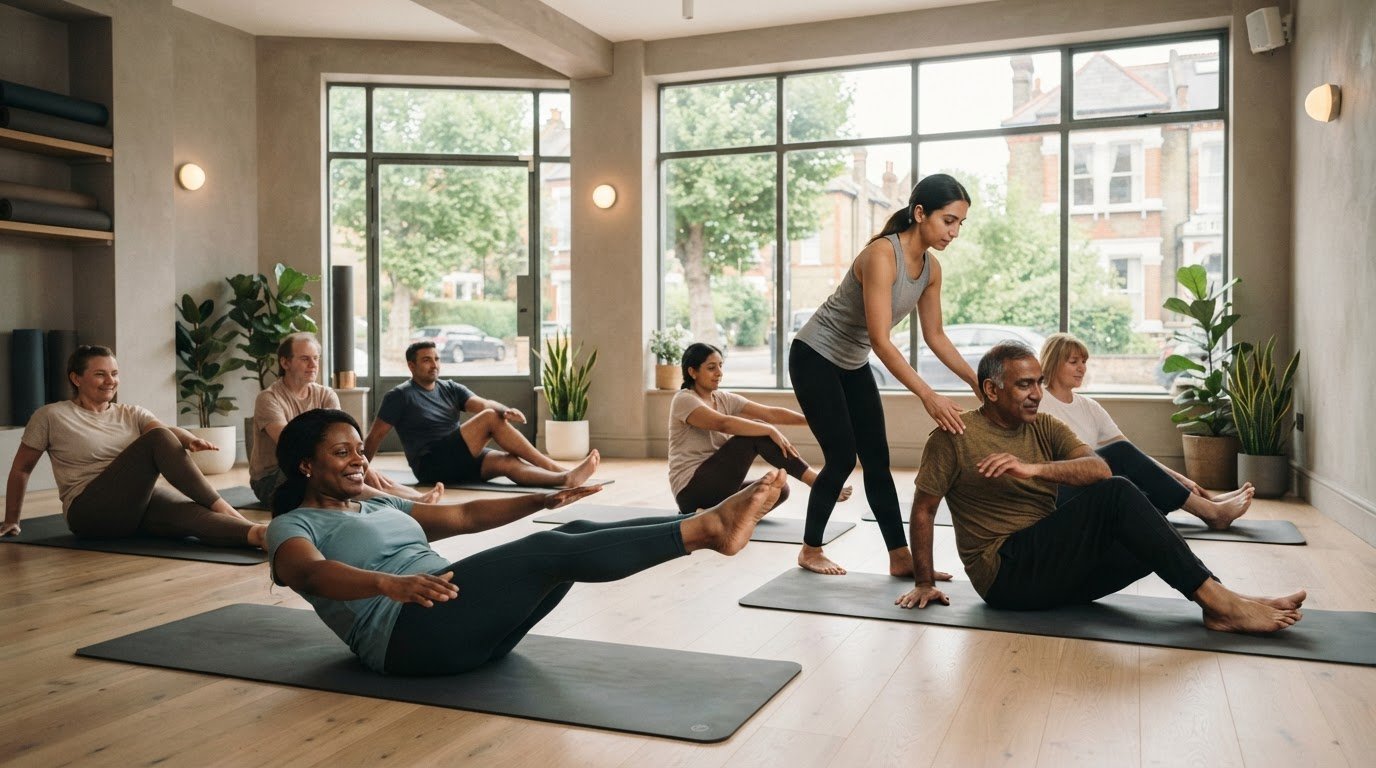
Stretching benefits and range of motion
Range of motion describes how far a joint moves comfortably in a particular direction. For example, shoulder range can affect how easily you reach an overhead shelf. A flexibility class uses controlled exercises to explore such movements at a manageable pace. The aim is steady practice, not forcing a position.
Stretching gives you a chance to become more familiar with particular movements. A calf stretch against a wall lets you notice how your ankle and lower leg feel. A seated side reach helps you explore movement through your trunk. Use a comfortable range and keep each movement controlled.
Balance work can add variety to movement practice. A standing heel raise beside a chair asks you to stay upright while moving through your ankles. Keep one hand near support and focus on steady posture. Exercises like this let you practise balance alongside stretching.
For significant improvements in flexibility and range of motion, a recommended routine is two to three stretching and flexibility classes per week. Fit that frequency around your existing activities, choosing sessions when you have time to move without rushing. Regular attendance gives you repeated opportunities to practise the same areas.
Use a simple approach in class:
Start with control: move into a stretch slowly, rather than bouncing.
Choose a comfortable position: bend your knee during a hamstring stretch if needed.
Stay steady: keep your breathing relaxed and avoid forcing extra range.
Notice the movement: compare how a shoulder reach or ankle bend feels over time.
These ideas can help anyone make practice more thoughtful, whatever their starting point. A beginner might choose a seated stretch, while someone accustomed to movement could try a standing version. Focus on staying balanced and controlled, not on how far another person reaches.
Keep expectations realistic. One class can introduce movements and options, but flexibility develops through practice. A stretch may feel different from day to day, depending on your posture and approach. Make a simple note of movements that felt comfortable, such as reaching overhead without leaning sideways.
Stretching can complement a broader movement routine rather than replace other activity. Pairing a gentle stretch with a walk, for example, gives you different ways to move. If you have an injury or medical condition, consult a healthcare provider before starting a new exercise programme. Share relevant limitations with the instructor so they can explain suitable options.
What mobility and flexibility classes are available in SE23?
In SE23, compare class descriptions rather than relying on titles alone. A listing for stretching may mean held positions, whilst mobility can describe controlled joint movement. For example, one session might focus on shoulders and hips, while another combines full-body movement with balance. The description helps you see which approach matches your goal.
Local timetables can include dedicated stretching sessions, mobility-focused movement, yoga or Pilates. These formats overlap, but their emphasis can differ. A yoga class may pair poses with breathing, whilst Pilates often uses controlled sequences and core work. Check the session details for the movements and class level, rather than assuming every format offers the same focus.
To find a suitable option, search local studio and gym timetables for terms such as “stretch”, “mobility”, “flexibility”, “yoga” and “Pilates”. Then compare the class description, level guidance, venue and scheduled time. If a listing says “all levels”, look for examples of beginner options, such as seated alternatives or supported standing movements.
Use these details to narrow your shortlist:
Class aim: identify whether it focuses on stretching, joint movement, balance or a blend.
Movement choices: look for examples such as hip stretches, shoulder circles or floor-based sequences.
Level guidance: check whether the description explains ways to adapt movements.
Practical fit: compare the location and timetable with your usual travel route and routine.
Forest Hill is within SE23, but a postcode alone doesn’t show whether a class will suit you. Compare the actual journey, arrival arrangements and session content. For instance, a nearby class with floor-based work may suit your aims better than a farther option focused on standing movement.
If the timetable uses broad labels, read the description for details of the sequence. A session that names gentle warm-up movements, stretching and a calm finish gives a clearer picture than the title alone. Check whether the class uses mats or other equipment so you can arrive prepared.
Make a shortlist of suitable sessions, then choose one based on your current goal. If you want to move your shoulders more freely, prioritise a class that describes upper-body mobility. If you’re looking for a broader movement practice, compare yoga or Pilates descriptions. Explore local movement options as you decide which format to try.
Before booking, read the timetable carefully and note the venue and session level. A clear description lets you compare options across SE23 without assuming that every class labelled “stretch” follows the same format. Choose the class whose stated movements and practical details fit your needs.
Options include dedicated stretching and mobility-focused sessions, as well as yoga and Pilates. The specific movement focus varies by class.
Gym n Go Forest Hill: Flexible Gym Memberships
Gym n Go Forest Hill offers Flexible Gym Memberships for people building regular movement into their routine. If you want guided practice alongside independent exercise, its Yoga & Pilates Classes provide another way to explore movement. Personal Training can also help you work towards individual fitness goals.
Choose the option that suits how you prefer to exercise. You might add a class to your weekly routine or use a flexible membership to support your own training. Gym n Go offers a welcoming local setting in Forest Hill for taking that next step, without making flexibility practice your only activity.
Explore your options at Gym n Go in Forest Hill.
Make your next movement choice
Finding mobility and flexibility classes in SE23 is a useful start, but the next step is choosing a routine that fits your life. Think about the type of movement you enjoy and what will help you keep returning. A steady, comfortable practice is easier to build when it works alongside your everyday commitments.
Gym n Go in Forest Hill offers Flexible Gym Memberships, Yoga & Pilates Classes and Personal Training. These options support different ways to stay active, whether you prefer guided classes or individual help with your fitness goals. Choose the support that feels most relevant to your next step.
Explore your options and contact Gym n Go Forest Hill to find out more. Start with a manageable choice, give yourself room to build confidence, and enjoy making movement part of your routine.
Frequently Asked Questions
How do I sign up for a class?
Choose a class and follow the booking instructions. Before registering, read the description for its focus, level and location. At Gym n Go in Forest Hill, members and non-members can book scheduled group fitness classes. Contact the team through the website for booking details, and note any questions, such as what equipment to bring.
Which SE23 classes are suitable for beginners or people with limited flexibility?
Look for beginner guidance and clear movement options, such as seated alternatives or supported standing exercises. A gentle yoga or Pilates class may offer a useful starting point, depending on its specific description. For classes for mobility and flexibility in SE23, compare the stated pace and movements rather than relying only on labels such as “stretch”. Choose a session that lets you work within your comfortable range.
Are mobility and flexibility classes in SE23 suitable for older adults or people with injuries?
Older adults can consider a class suited to their balance, movement and fitness needs. Anyone with an injury or medical condition should consult a healthcare provider before starting a new exercise programme. Discuss any movement restrictions before attending, then tell the instructor about relevant limitations. This can help you understand whether positions need adapting and which movements to approach carefully.
What should I bring and wear to a mobility or flexibility class?
Wear comfortable clothes that let you bend, reach and move freely. Try a gentle squat or overhead reach before leaving home to check that your clothing feels comfortable. Check the class information for equipment requirements: a floor-based session may use a mat, while other formats may need little equipment. Bring water and follow the instructor’s guidance.
How can I book a mobility or flexibility class in SE23?
Check the class timetable and follow its booking instructions. At Gym n Go in Forest Hill, members and non-members can book and pay for scheduled group fitness classes, including Yoga & Pilates Classes. Contact the team through the Gym n Go website for booking details. Compare the class description with your movement goals and note the venue location before choosing.
How do SE23 mobility and flexibility classes compare with nearby areas such as SE22 and SE26?
Postcode labels alone don’t show whether classes in SE23, SE22 or SE26 differ in pace, level or format. Compare class descriptions, beginner guidance and travel convenience.
Comments