
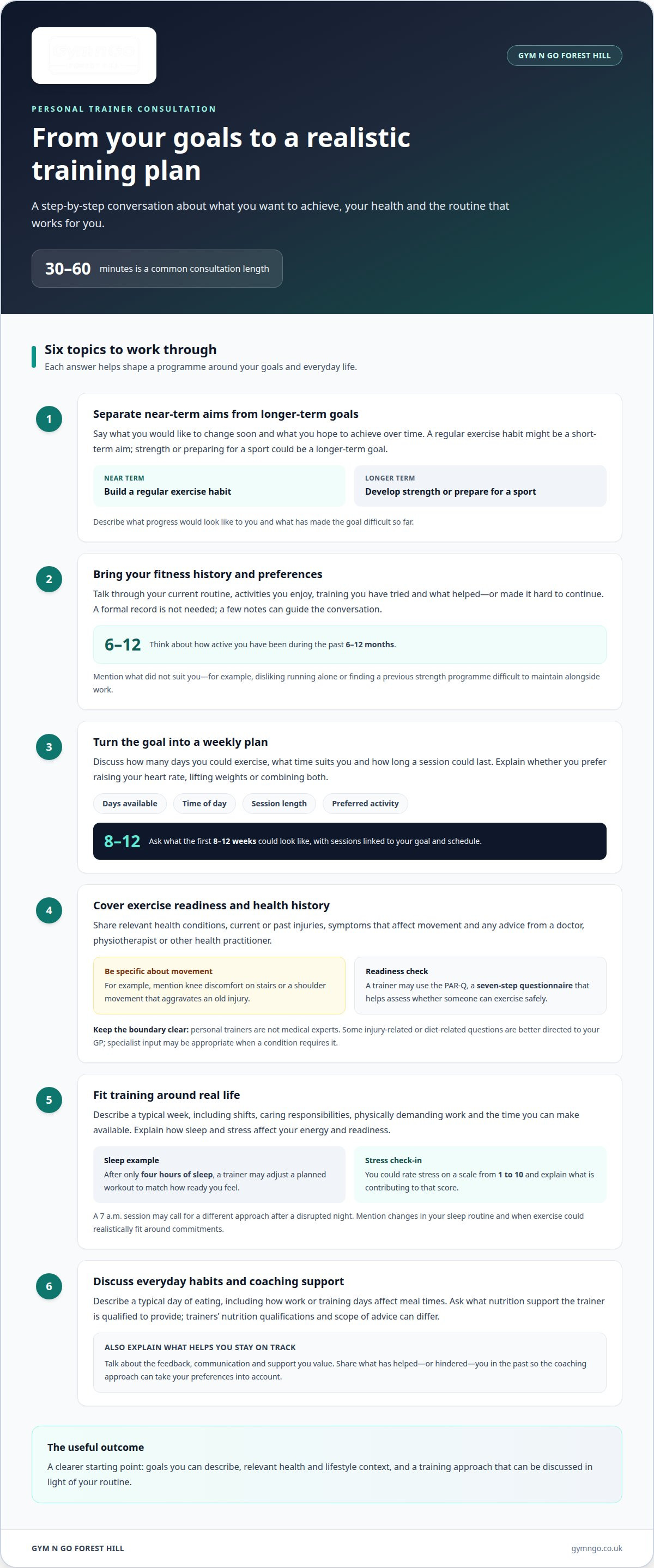
Questions to ask about goals, health and lifestyle at a personal trainer consultation

The best personal trainer consultation is a conversation about your goals, health, routine and the coaching you need. If you’re wondering what to ask at a personal trainer consultation, start with how your short- and long-term goals can become a realistic plan, then discuss exercise readiness, health history and lifestyle. A consultation commonly takes 30 to 60 minutes.
It’s natural to feel unsure about what to share, especially if you’re new to training or returning after a break. Your current fitness level, past experiences, preferences and day-to-day commitments all help shape an approach that feels achievable and suited to you.
This guide covers useful questions about your goals, any health concerns or injuries, sleep, stress and time constraints, as well as the trainer’s communication style and coaching approach. You’ll come away better prepared to explain what matters to you and understand how your training could fit into everyday life.
Table of Contents
1. Clarifying clients’ short- and long-term fitness goals
A useful conversation separates what you want soon from what you hope to achieve over time. For example, a short-term goal might be building a regular exercise habit, while a longer-term goal could focus on strength or preparing for a sport. Explain what progress would look like to you and what has made that goal difficult so far. This gives the trainer a clearer starting point than a broad aim such as “getting fitter”.
What information should you bring to a personal trainer consultation? Bring a simple account of your fitness background, current routine, preferences and goals. Include how active you have been during the past 6-12 months, which activities you enjoy, and any training you have tried before. You don’t need a formal record. A few notes about what worked, what didn’t and what made it hard to continue can guide the discussion.
If you’re deciding what to ask at a personal trainer consultation, explain what happened during past attempts to reach your goals. If you stopped running because you disliked training alone, say so. If a previous strength programme felt too demanding alongside work, describe which parts were hard to maintain. The trainer can explore options that suit your motivation and preferences, rather than repeating an approach that didn’t work for you.
Turn your goal into a weekly plan by discussing how many days you could exercise, what time of day works and how long each session could last. Consider whether you prefer raising your heart rate, lifting weights or combining both. A trainer may outline what the first 8 to 12 weeks could look like, linking each session to your goal and schedule.
Knowing what to ask at a personal trainer consultation also means describing the outcome you want. Someone training for a competition may need sport-specific sessions around competition days, while another person may want to build strength for everyday activities. These examples help shape a tailored programme and give you practical milestones for reviewing progress.
2. Assessing exercise readiness and medical history
An initial assessment should cover health conditions, current and past injuries, and your readiness for exercise. Mention practical limitations too, such as knee discomfort when climbing stairs or difficulty raising one arm. These details help a trainer understand which movements may need adjusting and identify concerns that may require specialist input.
A trainer assesses fitness, health and goals through a conversation about your activity, medical history and aims. They may also use the Physical Activity Readiness Questionnaire (PAR-Q), a seven-step questionnaire that helps assess whether someone can exercise safely.
Be open about diagnosed conditions, symptoms that affect movement and any injury that still changes how you exercise. For example, explain which movements aggravate a previous shoulder injury and what activities feel comfortable. Sharing these details isn’t a test; it gives the trainer a clearer starting point for discussing suitable exercise and possible adjustments.
Share whether you’re currently under the care of a doctor, physiotherapist or another health practitioner. A trainer may ask follow-up questions about the concern and any advice that affects your activity. If you have ongoing back pain, for instance, explain how it affects daily movement and what guidance you’ve received. This conversation helps distinguish training considerations from questions best discussed with a health professional.
Some health matters need more than a trainer’s expertise. Personal trainers aren’t medical experts, and injury-related or diet-related questions may be better directed to your GP. If a condition suggests specialist input is needed, referral is more appropriate than guessing. Questions about smoking should also be handled kindly and without judgement, so you can answer honestly and discuss readiness for exercise clearly.
Use the consultation to discuss what adjustments would make training practical and comfortable. If a movement causes pain or a health concern needs further attention, say so clearly. You can talk through exercise readiness as part of a personal training conversation.
Lifestyle, sleep, stress and nutrition
Your lifestyle can shape which workout schedule feels practical. Explain any fixed shifts, caring responsibilities or time constraints, and mention physically demanding work. For example, a manual job may leave you tired after a long shift, so a trainer can factor that into session planning. Describe a typical week, including when exercise could fit around work and other commitments.
Sleep is another useful part of the conversation. If you slept only four hours before a planned session, your trainer may adjust that workout to match how ready you feel. A 7 a.m. training session, for example, may need a different approach after a disrupted night. Share changes in your sleep routine so the trainer can understand how your energy varies across the week.
To make stress easier to discuss, you could rate it on a scale from 1 to 10. Explain what is contributing to that score, such as a busy work period or a demanding commute. This gives the trainer context for your readiness and helps you decide whether a session should follow the usual plan. Tracking stress alongside workouts can also help reveal patterns over time.
Discuss your usual eating habits by describing a typical day, from breakfast through evening meals and snacks. You might explain that work affects when you eat, or that your routine changes on training days. This gives the trainer insight into your habits and where general guidance may be useful. Keep the conversation practical, focusing on your everyday routine rather than trying to present a perfect menu.
Ask what nutrition support the trainer is qualified to provide. Personal trainers don’t all hold nutrition qualifications, so their training and scope of advice can differ. Clarify whether they can offer general guidance or address specific dietary questions. This helps you understand what they can cover alongside exercise, recovery and cardiovascular training, and what falls outside their expertise.
4. Coaching expectations and communication style
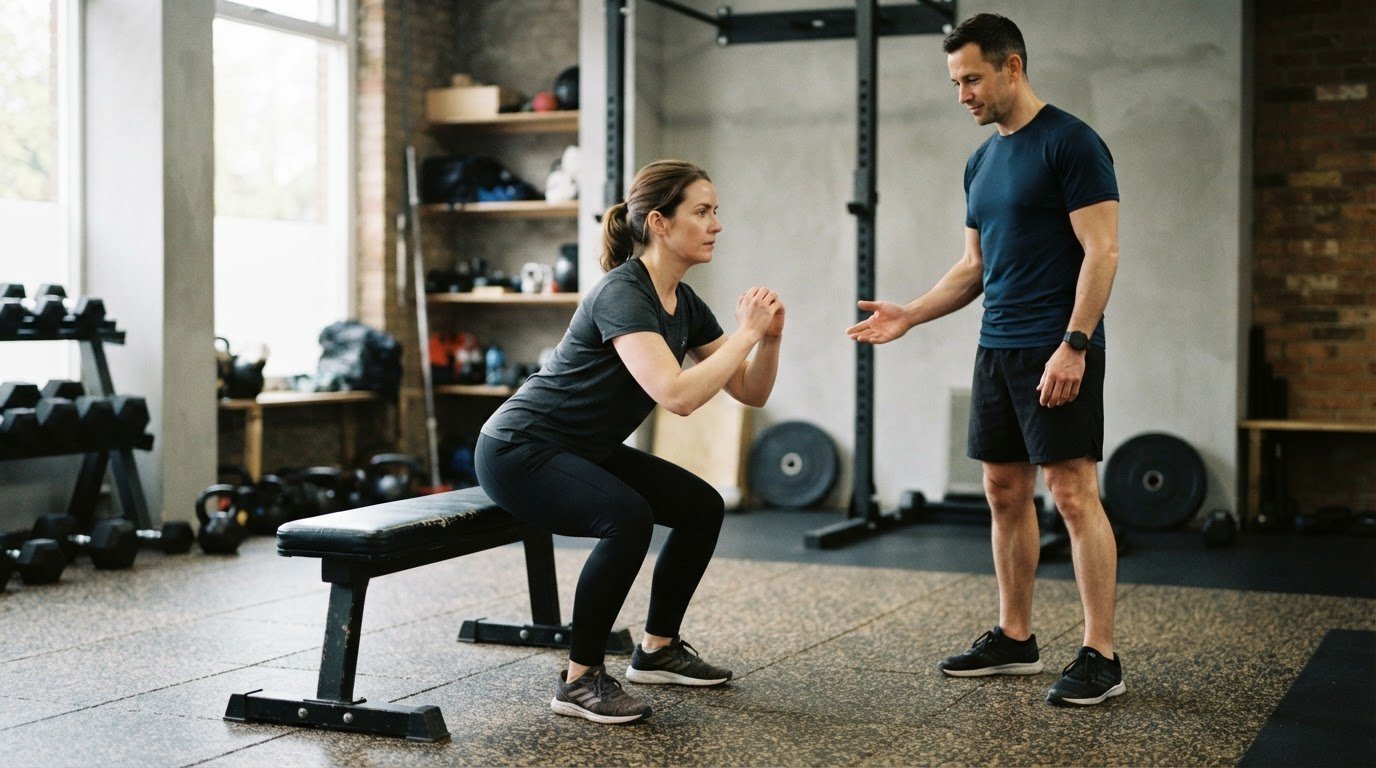
Agree what support should look like before your first session. Do you prefer clear instructions during each exercise, or time to practise independently? Explain how you respond to feedback, such as wanting technique corrections straight away. A trainer should ask what you expect and address unrealistic expectations early. For example, discuss how progress will be reviewed rather than assuming every workout produces a visible change.
For a personal trainer consultation, ask what support is available between sessions, including whether you’ll receive a plan or review notes at your next meeting. If you want help staying consistent, explain what kind of check-in would motivate you. If you prefer to manage exercise independently between appointments, say so. Agreeing on the approach helps prevent confusion about support and responsibilities.
Ask about experience relevant to your fitness goals. A trainer who mainly works on strength may approach your sessions differently from one experienced in sports preparation. If weight management is a goal, clarify how they discuss exercise and eating, and whether nutrition advice falls within their qualifications. Their answers should make their role and approach clear.
For a personal trainer consultation, ask which qualifications the trainer holds, who awarded them, and whether their training matches your needs. For a strength goal, ask about relevant strength coaching education and experience. If you have a specific health concern, clarify how they handle it within their professional scope.
Before agreeing to a session package, ask how cancellations work, what notice is required and whether missed sessions can be rearranged. Clarify any package expiry dates and payment terms before committing. These details can affect how well the arrangement fits around shift work, family commitments or changing schedules.
Choose a coaching style that supports your routine and preferences. Discuss your personal training goals and the kind of guidance that would help you stay engaged.
Gym n Go Forest Hill: Personal Training
Gym n Go Forest Hill offers personal training to help turn your goals and preferences into a practical training approach. Use the questions above to explain what you’d like from coaching, including your preferred exercises, schedule and support. This gives the conversation a clear starting point.
If you want other ways to stay active, Yoga and Pilates classes provide options alongside training. Flexible gym memberships can support a routine that fits your wider week. Choose personal training when you’d value guidance in applying your consultation priorities to your workouts.
Contact Gym n Go Forest Hill to discuss personal training and what you hope to achieve.
Take your next step with confidence
Knowing what to ask at a personal trainer consultation can help you decide whether the proposed approach feels right for you. Afterwards, consider whether you understand the next steps, feel comfortable speaking openly and can see how training could fit your routine. You don’t need every detail settled before you begin. A clear starting point gives you something practical to build on.
Think about what would make your first sessions feel manageable, then bring that into your next conversation. Your needs may change as you gain experience, so keep communication open and revisit your priorities as your routine develops. Progress is personal, and a suitable approach should make room for your preferences and circumstances.
If you’re ready to discuss your goals and coaching options, contact Gym n Go Forest Hill. Take the next step at a pace that feels right for you.
Frequently Asked Questions
What should I ask a personal trainer during an initial consultation?
Ask how the trainer will turn your priorities into sessions, what progress could look like, and how they’ll adapt if your circumstances change. For example, say, “I want to feel more confident using weights. What might we work on first?” Ask how they explain exercises and invite feedback, too. Their answers can help you judge whether the coaching feels clear and collaborative.
What questions should I ask about training plans and progress tracking?
Ask how the plan will connect to your goal, what you’ll record, and how reviews might shape future sessions. For example, if you’re working on strength, ask whether you’ll note the weights used and how each exercise felt. Find out how the trainer will respond if progress stalls or your schedule changes. The measures should be relevant to your goal, not just easy to count.
How should a personal trainer adapt workouts for injuries or health conditions?
A trainer should take your symptoms and movement limits into account, then adjust or replace exercises that aren’t suitable. For example, if a movement aggravates a knee problem, discuss alternatives rather than pushing through discomfort. Explain any relevant medical advice you’ve received. A trainer isn’t a medical professional, so questions about diagnosis, treatment or unresolved symptoms belong with your healthcare practitioner.
What are the signs of a good or unsuitable personal trainer?
A good trainer listens carefully, explains the purpose of exercises and responds constructively when you share concerns. You should be able to ask questions without feeling dismissed. Be cautious if a trainer ignores your stated limits, pressures you into an approach you’re uncomfortable with, or promises a particular result. A respectful conversation about your needs is a useful sign of a suitable coaching relationship.


Comments